
Search Dallas County Obituaries
Dallas County death records and obituary information are available through two main offices: the Dallas County Clerk and the City of Dallas Bureau of Vital Statistics. Which office you contact depends on where and when the death occurred. This page covers both sources, explains the difference between them, and walks you through how to request certified copies of death certificates for deaths in Dallas County, Texas.
Dallas County Overview
Dallas County Clerk
The Dallas County Clerk is the official custodian of death records for events that occurred anywhere in Dallas County. Records go back to 1903. The clerk's office issues certified copies of death certificates and keeps the local registry of all vital events. You can request records in person, by mail, or online through their portal.
Dallas County is one of the largest counties in the country, with over 2.6 million residents. It covers the city of Dallas and dozens of surrounding communities including Irving, Garland, Grand Prairie, Mesquite, Carrollton, and Richardson, among others. Because the county is so large, it processes a high volume of death record requests each year. The online search and order system helps handle that volume.
| Office | Dallas County Clerk - Vital Records |
|---|---|
| Address | Records Building, 2nd Floor 509 Main Street Dallas, TX 75202 |
| Phone | (214) 653-7099 |
| Website | dallascounty.org |
| Online System | dallascountytxvitals.permitium.com |
The Dallas County Clerk handles all deaths that occurred in Dallas County from 1903 to present, with one key exception: deaths that occurred within the city limits of Dallas from April 1, 1983 onward are handled by the City of Dallas Bureau of Vital Statistics. For anything before that date, the county clerk is the right office regardless of where in the county the death happened.
Search Dallas County Obituaries Online
The Dallas County online vitals portal gives you a way to search death records from home. Visit dallascountytxvitals.permitium.com to start a search. There is a non-refundable $21 search fee for each record searched. Even if no record is found, the search fee applies. You will need a credit or debit card to pay online.
The screenshot below shows the Dallas County online vital records system used to search and order death certificates.
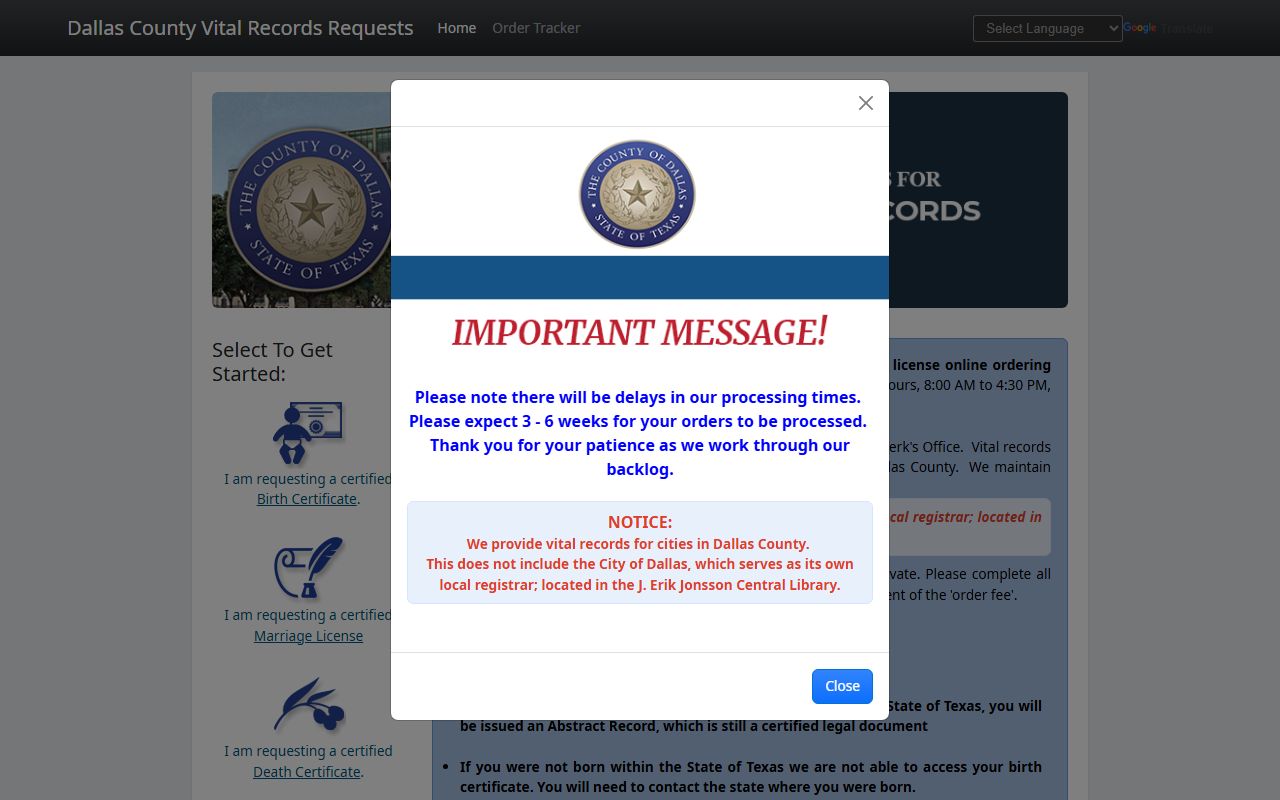
The online portal covers Dallas County death records and allows you to request certified copies after a successful search. You must meet eligibility requirements to order a certified copy.
The main Dallas County Clerk page has additional information on what records are available and how the request process works. The screenshot below shows the Dallas County Clerk's office vital records section.
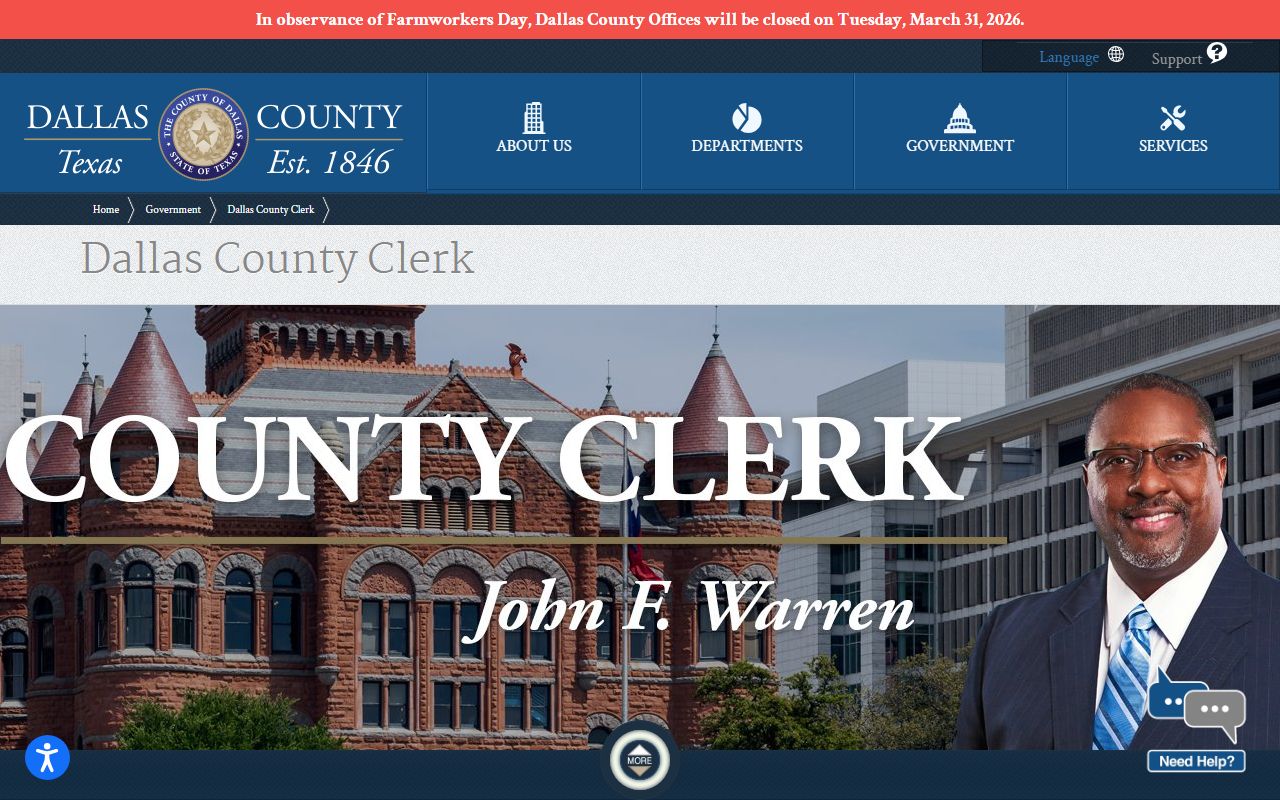
The clerk's office is open Monday through Friday during normal business hours. In-person visits are accepted at the Records Building on Main Street in downtown Dallas.
For statewide death records and older records, the Texas DSHS Vital Statistics section also maintains Dallas County death records. You can order online through the DSHS Online Vital Records Application. Legacy.com also hosts many Texas obituaries including those from Dallas-area newspapers.
Note: The $21 search fee for the online county system is non-refundable even if the record is not found. Have full name and approximate date of death ready before you start.
City of Dallas Vital Statistics
Deaths that occurred within the city limits of Dallas from April 1, 1983 to present are handled by the City of Dallas Bureau of Vital Statistics, not the county clerk. This is an important distinction. If the death happened inside Dallas city limits after that date, you need to contact the city office.
The City of Dallas Bureau of Vital Statistics is located at 1515 Young St., Dallas, TX 75201. Their phone number is (800) 380-1138. This office issues certified copies of Dallas death certificates for city events from April 1983 forward. Staff can also help you confirm which office holds the record you need.
For deaths in other Dallas County cities like Irving, Garland, Grand Prairie, or Mesquite, the Dallas County Clerk handles records. The city of Dallas exception applies only to deaths within Dallas city limits. If you are unsure which office to contact, call both and describe the circumstances of the death. Staff can usually tell you quickly which office holds the record.
Note: The city office and county clerk are separate entities with separate records systems. A search of one does not search the other.
Requesting Dallas County Death Records
You can get Dallas County death records in three ways: online, in person, or by mail. Each method has its own steps and timeline.
Online orders through the county portal or DSHS are the most convenient option for most people. The Dallas County online system lets you search and order from home. The DSHS online order system is another option for state-level records. Both require you to meet eligibility requirements and pay by card. Check the online ordering requirements before you begin.
In-person requests at the county clerk's office on Main Street in Dallas are the fastest way to get a certified copy in hand. Bring a valid government-issued photo ID and know the full name and approximate date of death. You fill out a short form and the clerk processes your request. Certified copies are usually ready the same day.
Mail requests take longer. Write to the Dallas County Clerk, Records Building, 2nd Floor, 509 Main Street, Dallas, TX 75202. Include the deceased's full name, date of death, your relationship, your contact information, a copy of your ID, and payment. Allow several weeks for mail processing.
The Texas Health and Safety Code Chapter 193 governs how death records are filed. Under Health and Safety Code § 193.003, deaths must be registered within 10 days. If a death was registered late, you may need to follow the process under § 193.007 for delayed registration records.
Who Can Access Dallas County Death Records
Texas restricts access to death records less than 25 years old. The rules apply statewide and cover both the county clerk and the DSHS system.
Qualified applicants for restricted records include the deceased's spouse, parent, child, grandchild, or sibling. A legal representative acting for any of those people can also request records. Once a death occurred more than 25 years ago, the record is open to any member of the public. No family relationship is needed for older records. Genealogists and researchers can access records freely once that window has passed.
You must show a valid photo ID for any request. If you are a legal representative or attorney, bring documentation of your authority. The DSHS requirements page and the Texas Vital Records portal both explain the eligibility rules in detail.
Historical Dallas County Death Records
For genealogy research and older death records, several free and low-cost resources can help. Dallas County has been one of the largest population centers in Texas for over a century, so records tend to be well-preserved.
FamilySearch has indexed large numbers of Texas death records and offers free searches. Many Dallas County records from the early 1900s through the mid-century are available in their database. The Texas State Library and Archives Commission holds additional historical records and microfilm collections covering Dallas County deaths going back decades. The Library of Congress Texas genealogy guide is another useful starting point for historical research.
Newspaper archives from the Dallas Morning News and other local papers are rich sources of obituary information. Many libraries carry these on microfilm or through digital subscription services. The Dallas Public Library also maintains genealogy collections that include obituary clippings and local history materials.
Cities in Dallas County
Dallas County includes several large cities. All of them fall under the Dallas County Clerk's jurisdiction for death records, with the exception of deaths inside Dallas city limits from April 1983 forward.
Nearby Counties
Dallas County borders several other Texas counties. If you are not sure which county holds a record, check the address where the death occurred.