
Texas Obituary Records
Texas obituary and death records are maintained at both the state and county level. The Texas Department of State Health Services keeps certified death certificates from 1903 to the present, while each of the state's 254 county clerks holds local records for deaths that occurred in their jurisdiction. You can search Texas death records online, by mail, or in person at a county clerk's office. This page covers where to find obituaries, how to order death certificates, and what resources are available for genealogy and vital records research in Texas.
Texas Death Records Overview
Texas DSHS Vital Statistics Section
The Texas Department of State Health Services Vital Statistics Section is the central state repository for all death records. This office maintains certified copies of death certificates for deaths that occurred anywhere in Texas from 1903 to the present. It is part of the Texas Health and Human Services agency. The VSS serves as the official state registrar for vital events and holds records for birth certificates, death certificates, marriage applications, and divorce records. You can reach them at toll-free number (888) 963-7111 for questions about orders or general vital statistics inquiries.
The DSHS Death Records page explains exactly what the office issues. A death record is a vital document that records a person's death. The section issues certified copies of death certificates and death verifications. Qualified applicants can order certified copies online, by mail, or in person at the Austin office. Death certificates contain the decedent's name, date of death, place of death, cause of death, and demographic information. Under Texas Health and Safety Code Chapter 193, the department prescribes the form and contents of all death certificates filed in the state.
The DSHS Vital Statistics Section is committed to protecting personal information. This may result in longer reviews on some applications to ensure proper identity verification and eligibility confirmation before releasing confidential records. Processing times vary based on the type of record and ordering method selected.
The DSHS Vital Statistics Section is the starting point for most Texas death certificate requests.
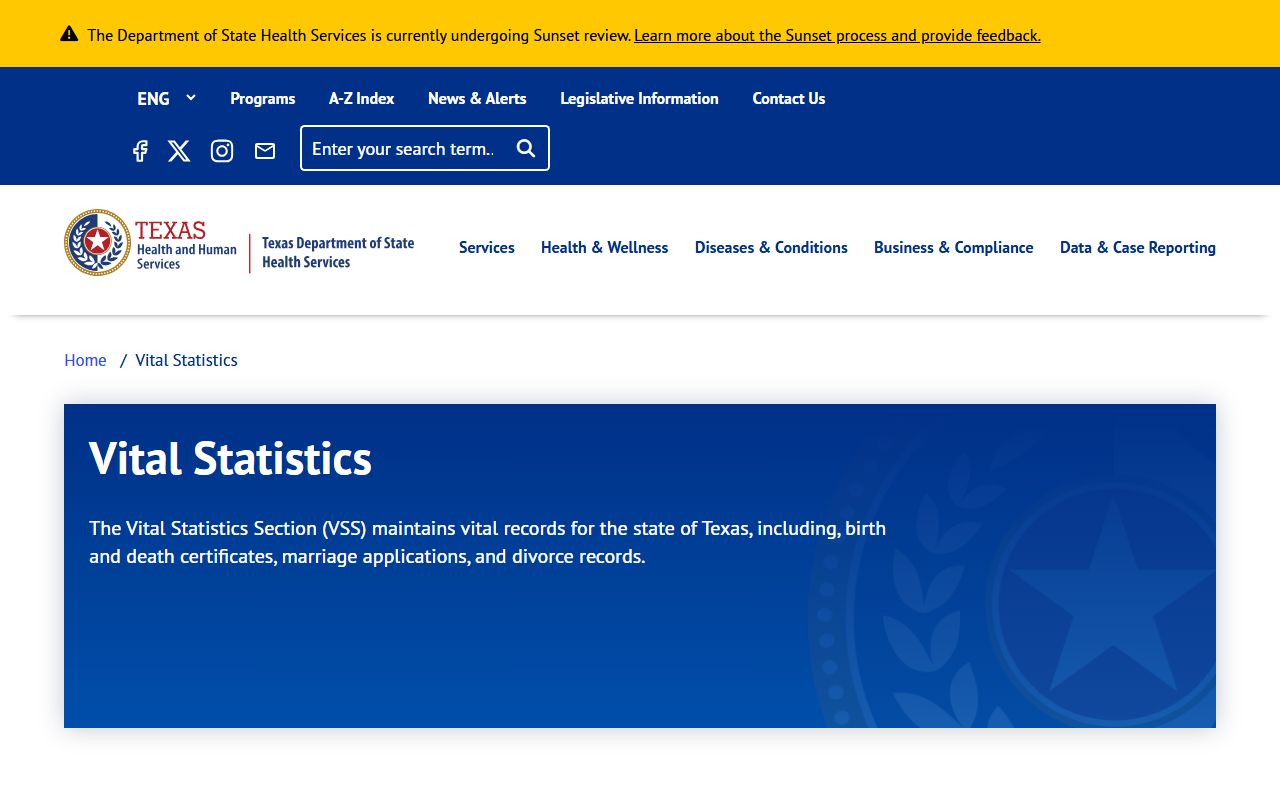
The DSHS homepage provides links to online ordering, mailing addresses, and eligibility requirements for obtaining Texas death records.
The Texas death records page details access rules and ordering methods for certified copies.
This page outlines the 25-year public access rule and lists who qualifies to request a death certificate before that period expires.
What Texas Death Records and Obituaries Contain
A Texas death certificate contains a standard set of information. The decedent section includes the full legal name, Social Security number, date of birth, age at death, place of birth, gender, race, and usual residence. The death information section includes the date and time of death, place of death, and the county where the death occurred. Under Texas Health and Safety Code Section 193.001, the department requires death certificates to include the county where the decedent died and the decedent's county of last legal residence.
Death certificates also record disposition information. This covers the place of burial or cremation, method of disposition, and the name of the funeral facility. The medical certification section lists the immediate cause of death, contributing conditions, and manner of death. It may also note whether fentanyl was present if toxicology confirms it under current state law. The name of the attending physician and the date of medical certification are included as well.
Traditional newspaper obituaries often contain more personal detail. They list survivors, a brief life summary, and service arrangements. Many Texas newspapers archive their obituaries online. Sites like Legacy.com Texas obituaries aggregate these listings from funeral homes and newspapers across the state. Searching by name and city can turn up notices from dozens of Texas publications going back many years.
The Texas Vital Records portal provides online ordering for certified copies.
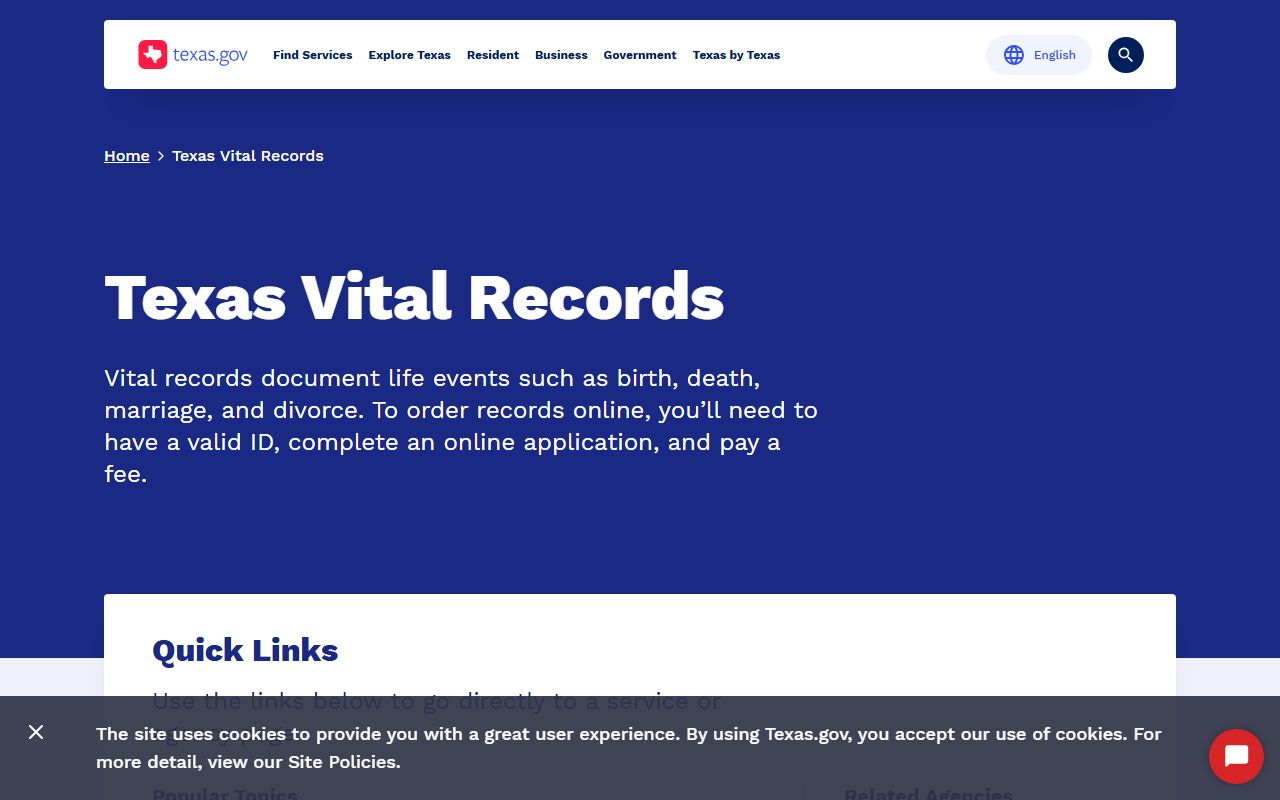
The portal at Texas.gov allows qualified applicants to order certified death certificates, verification letters, and other vital records online using a credit or debit card.
How to Search Texas Obituaries Online
Texas offers several ways to search obituary and death records online. The Texas Online Vital Records Access system, known as OVRA, is the official state portal for ordering certified death certificates. To use it, you need to confirm that you are a qualified applicant, provide identity documents, and pay the required fee by credit or debit card. The system is the fastest way to get a certified copy directly from the state. You can access the OVRA death certificate order page directly.
For genealogy research and historical records, FamilySearch Texas Vital Records provides free access to multiple Texas death record collections. The Texas Death Certificates collection covers 1903 to 1982 and includes index and images of over 4.8 million certificates. The Texas Deaths 1890 to 1976 collection has over 4.5 million indexed names and includes delayed certificates, foreign deaths, and probate obituaries. The Texas Death Index 1903 to 2000 indexes 7.25 million death records and is searchable by name, county, and year. These collections are free to search without creating an account.
The Legacy.com Texas obituary page aggregates current obituary listings from funeral homes and newspapers across the state.
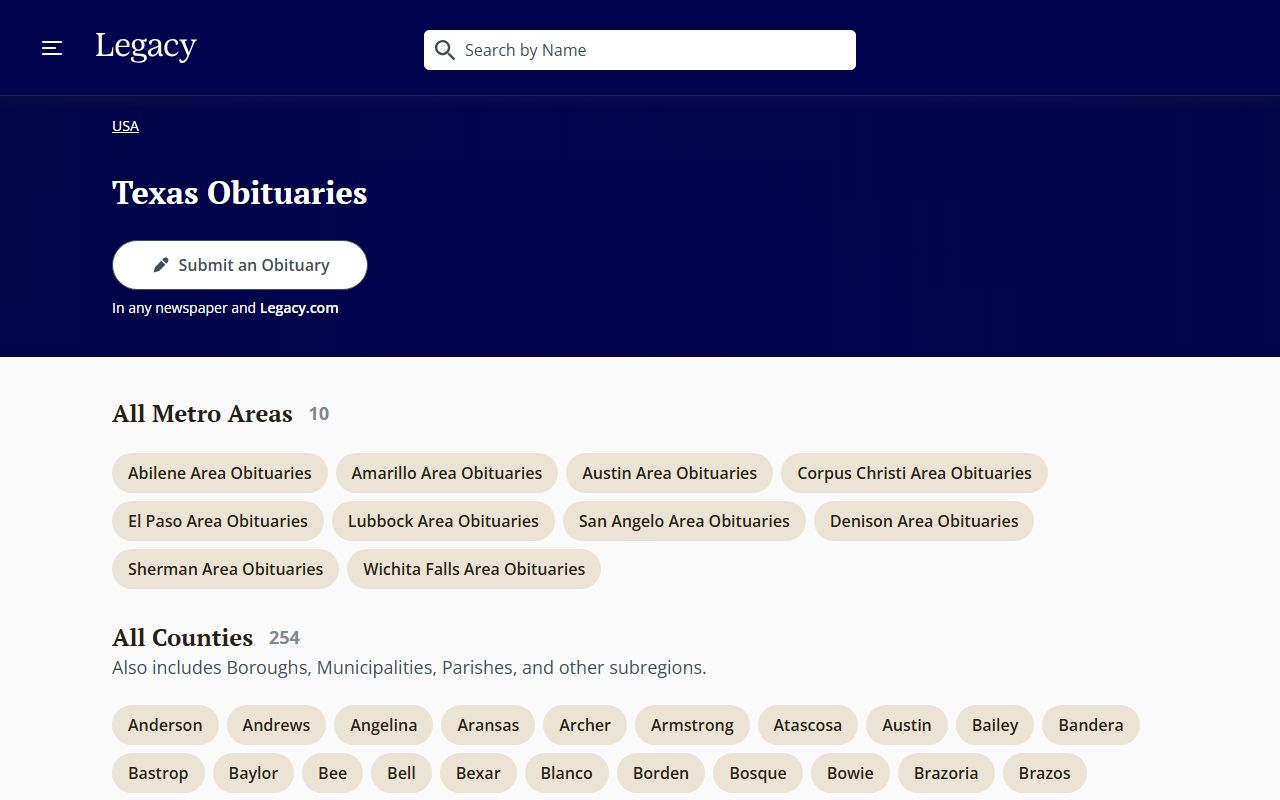
You can search Legacy.com by city or name to find recent Texas death notices and obituaries from dozens of local publications.
The OVRA online ordering portal for Texas death certificates is shown below.
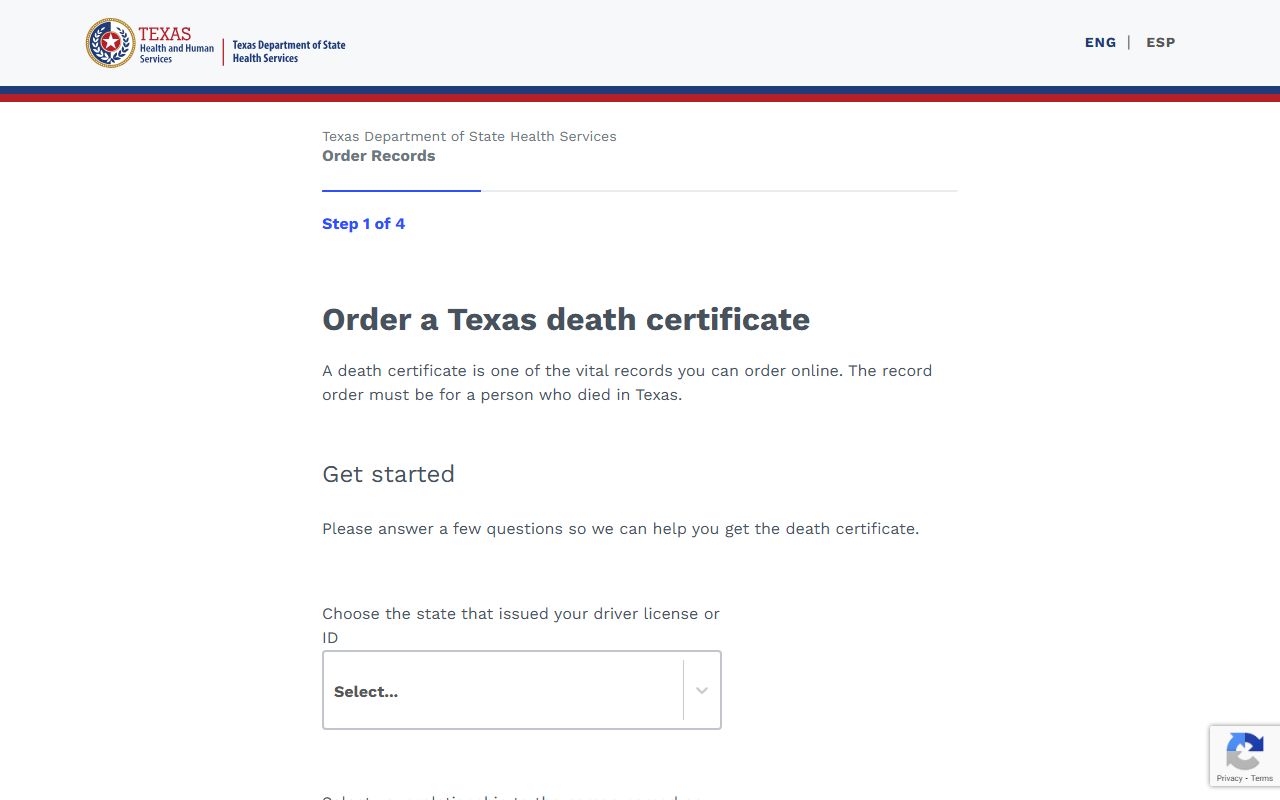
The OVRA system at ovra.txapps.texas.gov lets you complete the full request online and upload identity documents electronically.
How to Order a Texas Death Certificate
You can order a Texas death certificate three ways: online through the OVRA portal, by mail to the DSHS Vital Statistics Section, or in person at the Austin office. Online ordering is the fastest option. To qualify, you must be the person's immediate family member, legal representative, or other authorized party. The online order requirements page at DSHS lists the exact identity and eligibility requirements for each method.
For online orders, you need a state-issued driver's license or ID number, your Social Security number, and your relationship to the deceased. You also need to provide the date of death, the full name of the deceased as it appears on the record, sex, and the city or county where the death occurred. Payment is by credit or debit card only for online orders.
Mail requests go to Texas Vital Statistics, Department of State Health Services, P.O. Box 12040, Austin, TX 78711-2040 for regular processing. Expedited requests sent by overnight mail go to Texas Vital Statistics MC 2096, 1100 W. 49th Street, Austin, TX 78756. The vital records requirements page explains what identification and documentation to include with a mail order.
Online order requirements are shown here.
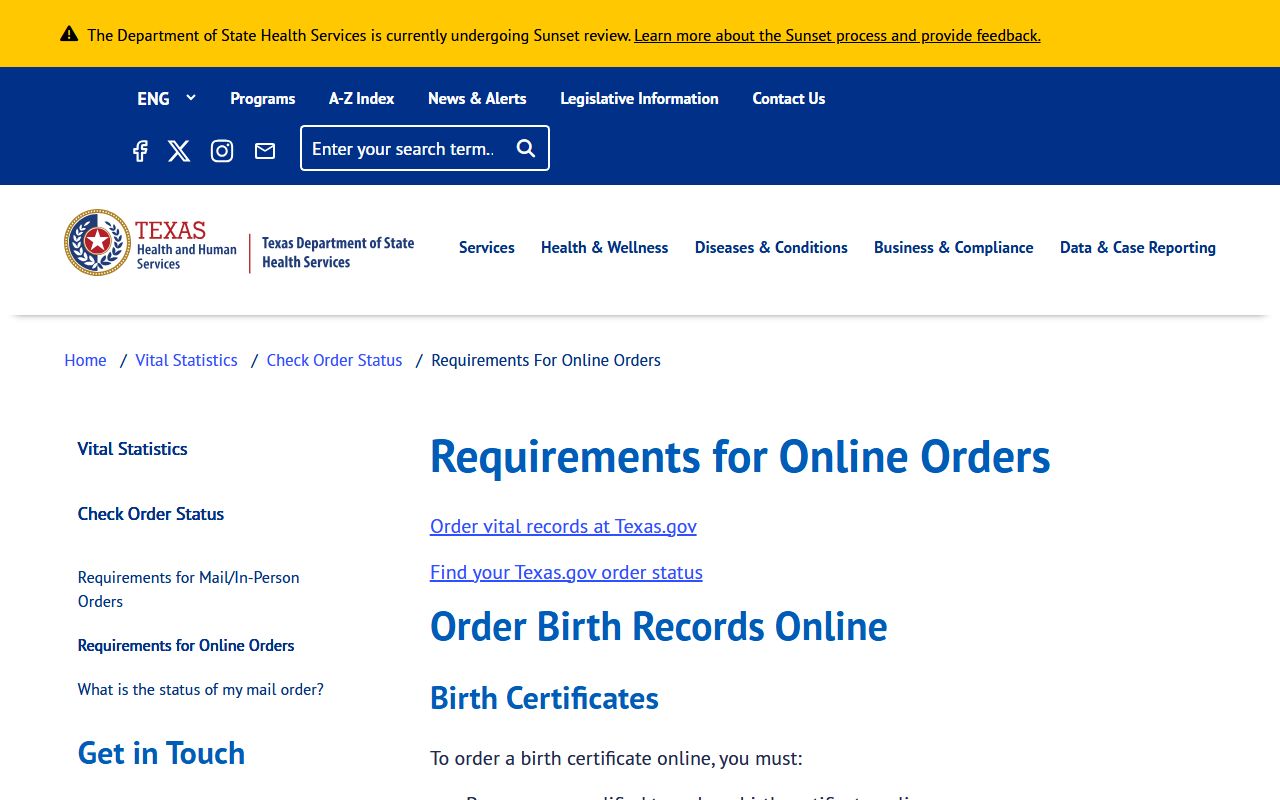
The requirements page at dshs.texas.gov walks you through the eligibility check and documentation steps before you place an order.
The vital records requirements page covers identification needed for all request types.
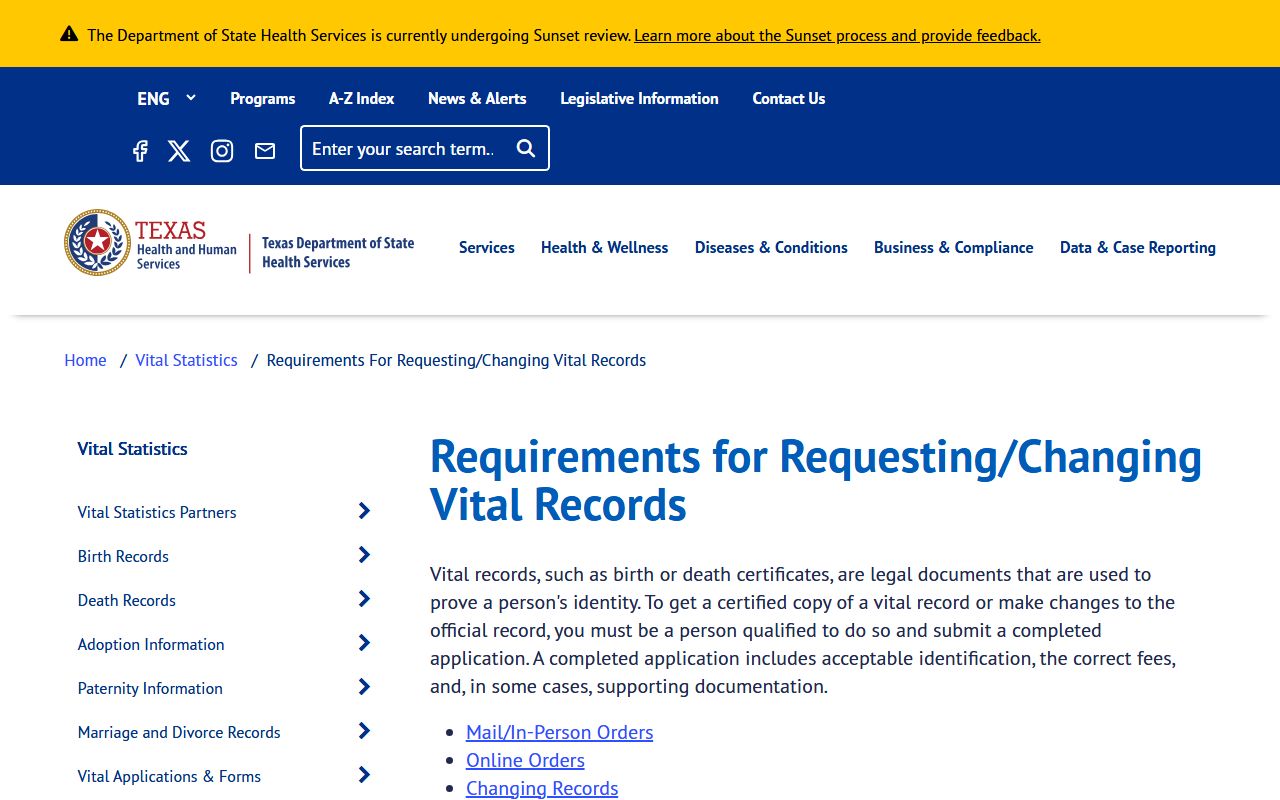
Acceptable forms of ID, notarization requirements for mail orders, and the specific documents needed for each requester type are all listed at dshs.texas.gov/vs/requirements.aspx.
Historical Texas Obituaries and Death Records
The Texas State Library and Archives Commission maintains indexes to death records from 1903 to 1973. These are available for public searches at the archives facility in Austin. The collection includes original death records, microfilm, and digital collections in the Archives Division. The library also holds extensive newspaper collections that contain obituaries and death notices going back to the early 1900s. These are especially valuable when looking for individuals who died before modern electronic record-keeping began.
The Library of Congress Research Guide for Texas Local History and Genealogy is a detailed reference for anyone doing historical death record research. It notes that state records are copies of records registered at the county level. Both the county clerk and the state DSHS have death records from 1903 to present. The guide points researchers to county-level sources first, then to state sources for cross-reference.
Statewide registration of births and deaths in Texas began in 1903. Before that year, records are sparse and held at the county level or in church and cemetery records. FamilySearch has a Texas Deaths 1890 to 1976 collection that includes some pre-1903 records, largely from probate obituaries and delayed registrations. The Texas Death Index 1903 to 2000 is searchable and contains 7.25 million records.
The Texas State Library and Archives holds key historical Texas death record collections.

The archives at tsl.texas.gov are open to the public and hold original death indexes plus microfilm records that predate electronic registration.
The Library of Congress guide to Texas vital records provides a thorough research roadmap.
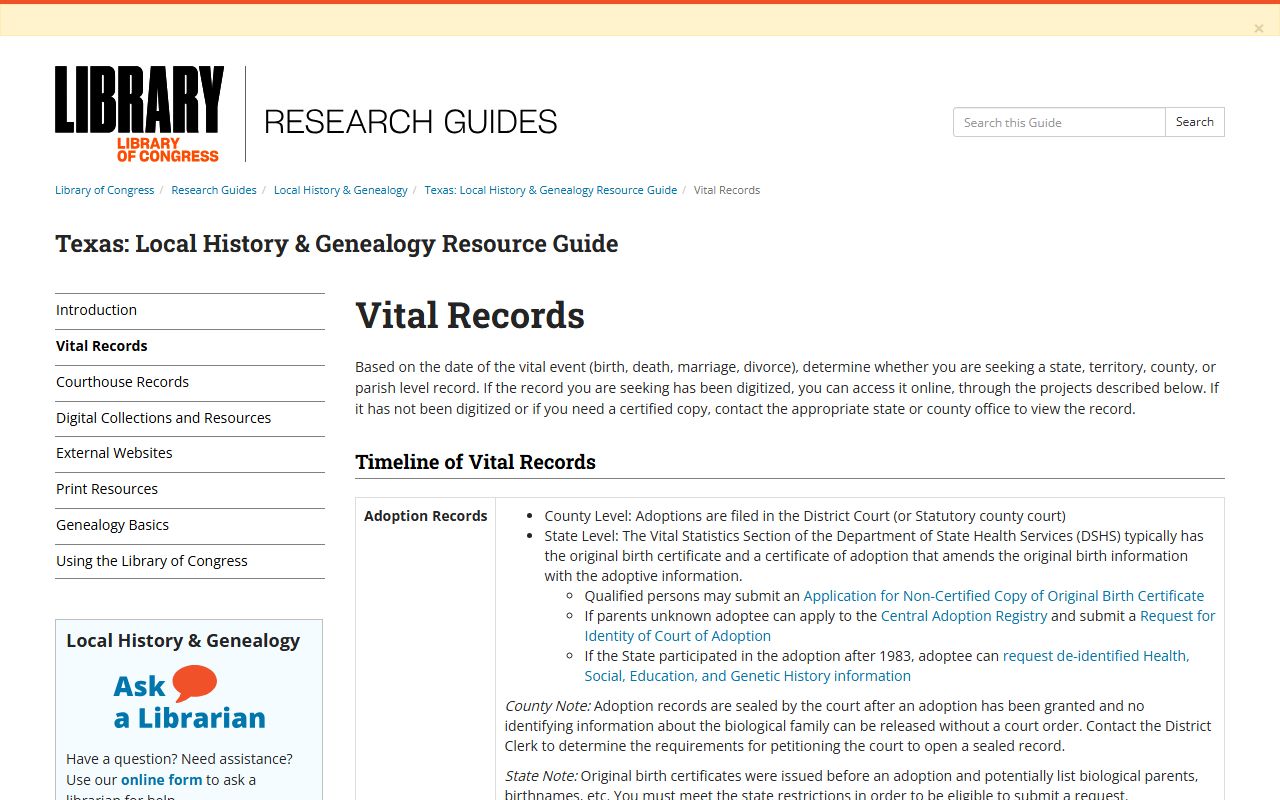
The guide at guides.loc.gov covers both county and state record sources and recommends the best approach for finding Texas death records at each time period.
Who Can Access Texas Death Records
Texas death records are not fully public until 25 years after the date of death. This rule comes from the Texas Health and Safety Code and applies to both the state-level records held by DSHS and county-level records held by county clerks. After 25 years, anyone can view the record. Before that period, only qualified applicants can get a certified copy. Qualified applicants include the registrant or immediate family members by blood, marriage, or adoption. Legal agents, guardians, and government agencies with a direct and tangible interest in the record also qualify.
Under Texas Health and Safety Code Section 193.002, the person in charge of interment or removal of a body must obtain and file the death certificate. The certificate must be filed with the local registrar not later than the 10th day after the date of death under Section 193.003. If a death is not registered within one year, a delayed registration must go through the county probate court per Section 193.007. The full text of Chapter 193 is available on the Texas Legislature website.
The Health and Safety Code Chapter 193 governs death records in Texas.
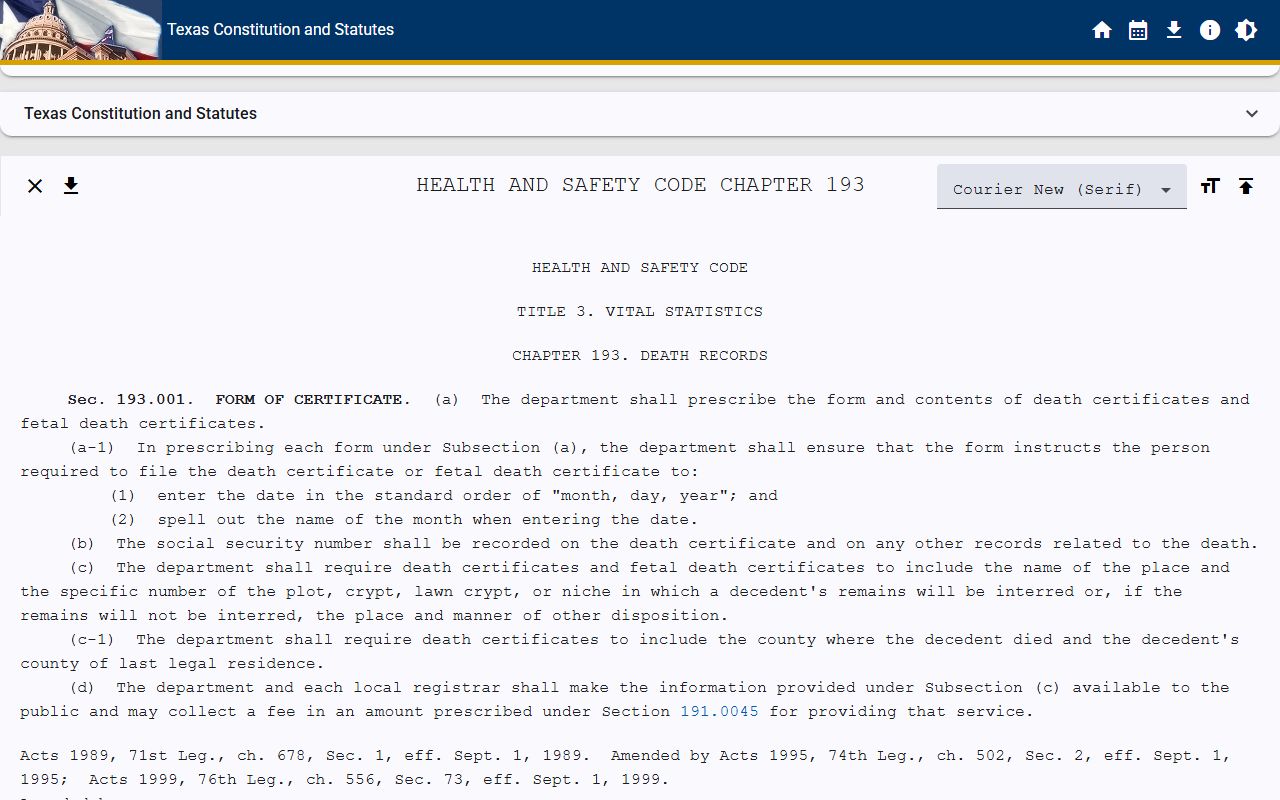
Chapter 193 at statutes.capitol.texas.gov covers the form of death certificates, who must file them, timelines, and the rules for delayed registration.
Mailing Addresses and Contact Information
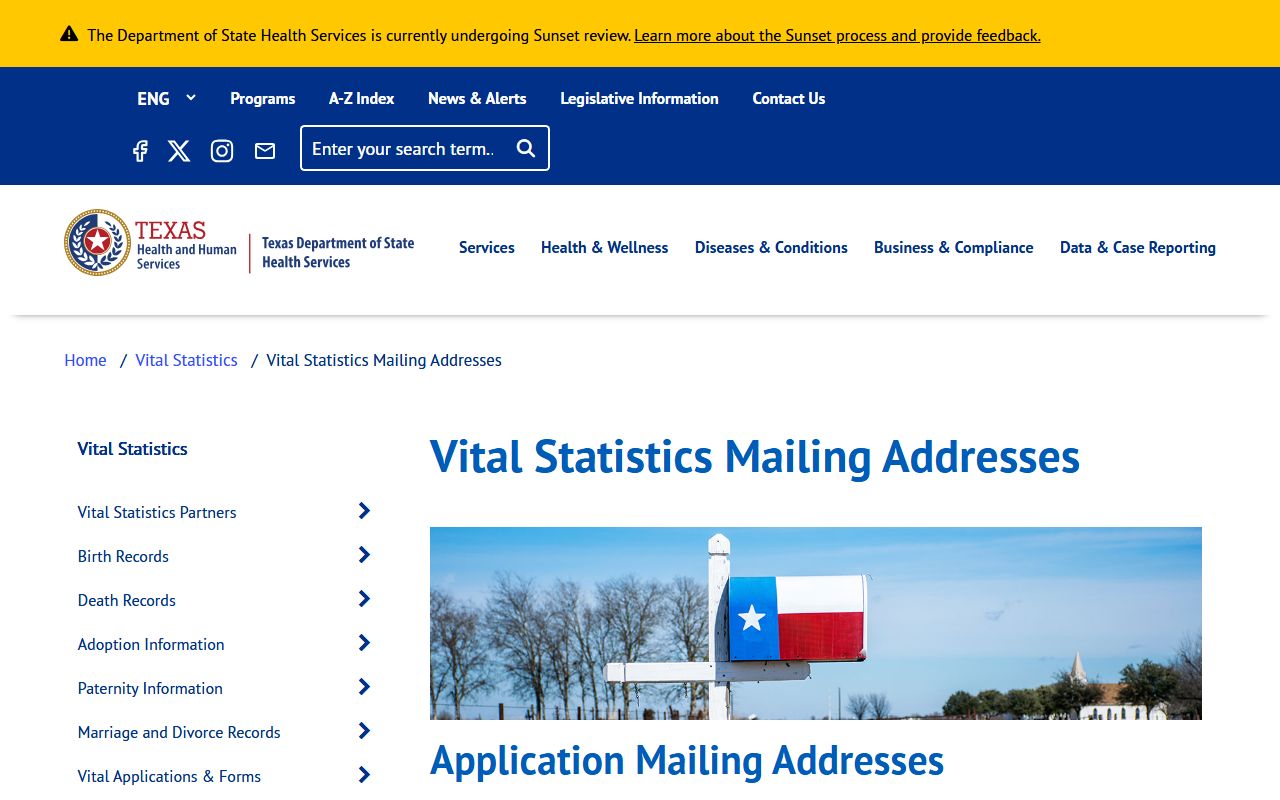
The Texas Vital Statistics Section has two mailing addresses depending on how you send your request. Regular mail goes to: Texas Vital Statistics, Department of State Health Services, P.O. Box 12040, Austin, TX 78711-2040. Expedited requests sent through overnight mail carriers go to: Texas Vital Statistics MC 2096, Department of State Health Services, 1100 W. 49th Street, Austin, TX 78756. For general questions, call toll-free (888) 963-7111.
County clerk offices handle death certificates for events that occurred in their county. Every county in Texas has a county clerk who serves as the local registrar. Death records go back to 1903 at most county offices. Some counties also offer records through local vital statistics offices, particularly in larger cities. El Paso County, for example, has both the county clerk and the El Paso County Public Health office handling death record requests.
The DSHS mailing address page has full address details for all request types.
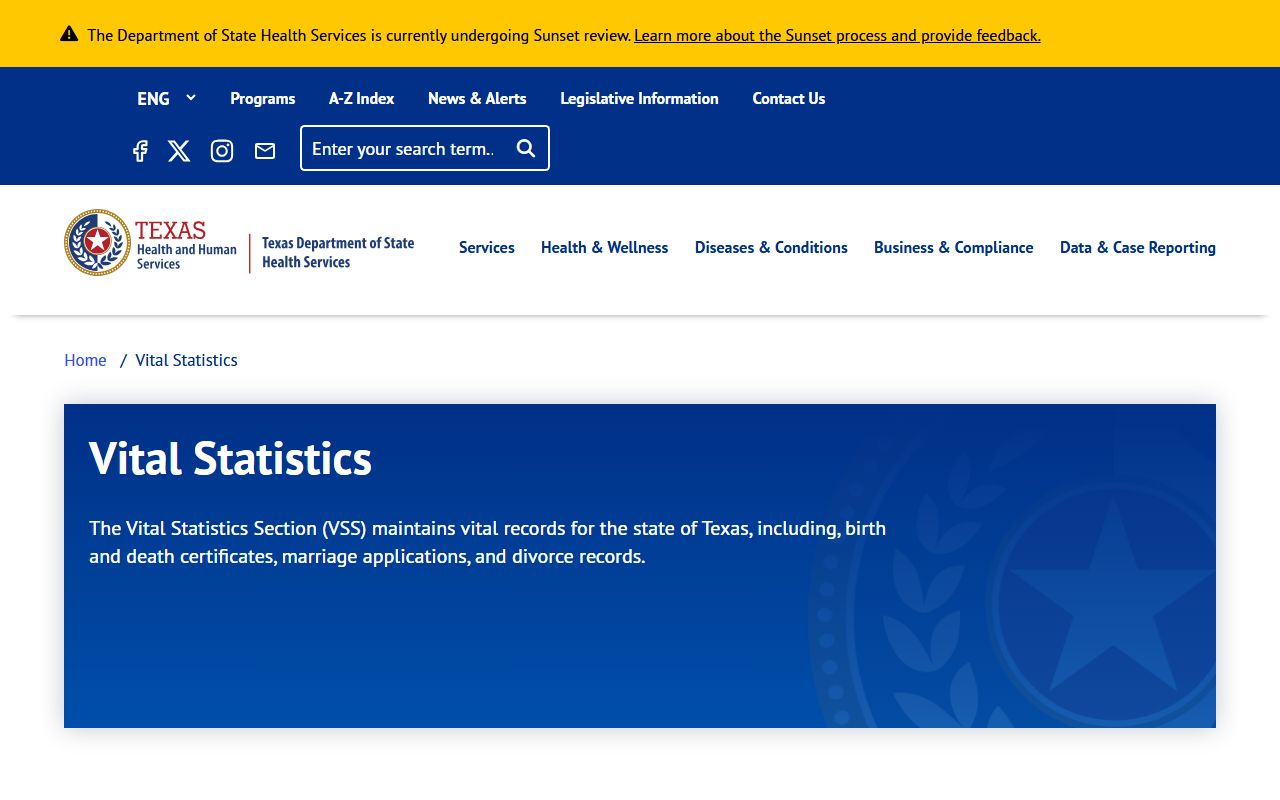
The addresses page at dshs.texas.gov/vs/addresses/ lists the regular and expedited processing addresses plus the address for subpoenas.
El Paso County Health also provides death record services at the county level.
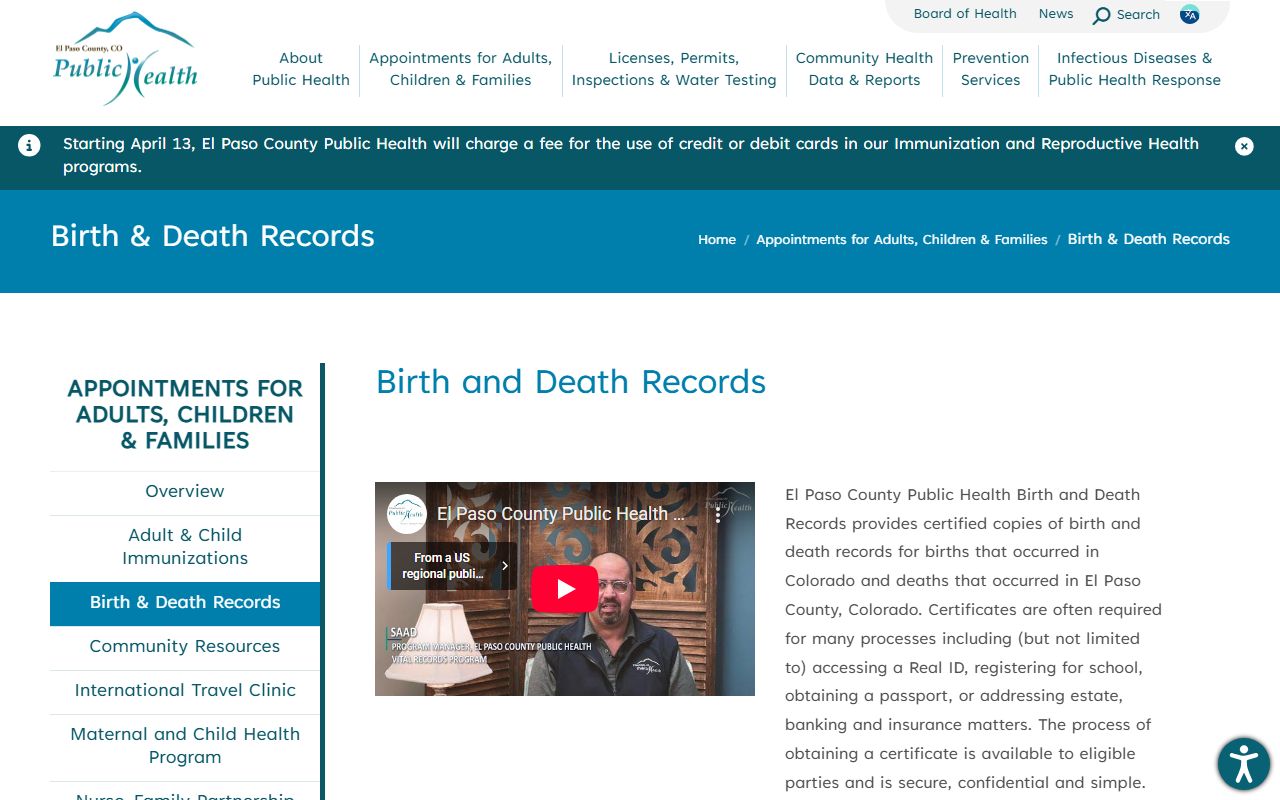
The El Paso County Public Health office issues certified copies of death certificates for deaths that occurred within El Paso County, offering a local alternative to requesting records from the state.
Browse Texas Obituary Records by County
Each of Texas's 254 counties has a county clerk that maintains death records for events occurring within that county. Select a county below to find local contact information, death certificate fees, and resources for Texas obituary records in that area.
Texas Obituary Records by City
Major Texas cities often have their own vital records offices in addition to the county clerk. Select a city below to find where to get obituary and death records for residents of that area.